How to Build a Stock Portfolio

How to Build a Stock Portfolio
Creating Your Investment Portfolio
Building an investment portfolio is an essential step towards securing financial confidence and wealth creation. It involves the portfolio analysis and strategic allocation of funds across various asset classes, such as stocks, bonds, and cash equivalents. A well-diversified investment portfolio helps to spread risk, minimize losses, and maximize returns over time.
To build an investment portfolio in the stock market, it's crucial first to understand the term "portfolio." In the world of finance, a portfolio refers to a collection of financial assets held by an individual or institution that may include stocks, bonds, cash, real estate properties, or even precious metals.
A portfolio and its underlying strategy serve as a roadmap for investors to plan out their investment goals and risk tolerance. Before getting started on building your investment portfolio, it's essential to establish clear objectives and determine your risk profile so you can better analyze your portfolio's performance later on.
Will you be prioritizing growth or income? Are you more comfortable with stable investments that provide steady returns or willing to take more significant risks for higher potential profits? Once you have clarity on these points, you can move forward with selecting suitable assets.
A good starting point is researching investment portfolio examples from experts and successful investors to gain insights into how they allocate their funds across different sectors. This can help you identify industries and asset types that align with your own objectives and risk preferences.
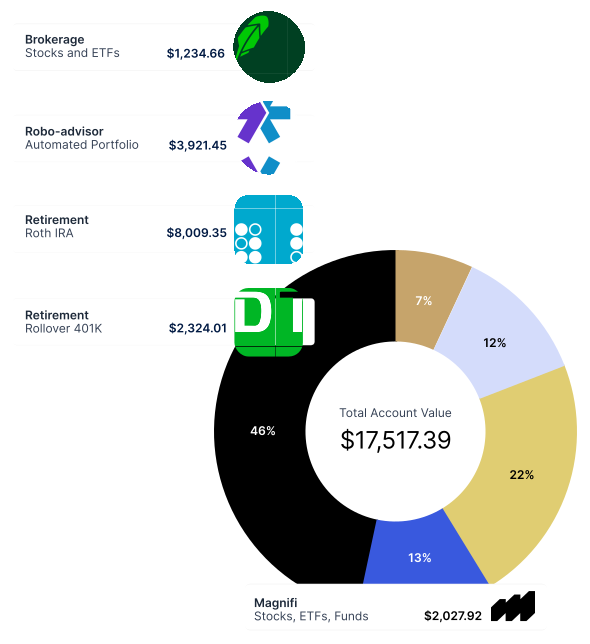
In addition to studying stock portfolio examples from successful investors, consider using an investment portfolio template as a guide for structuring your own. These templates often outline suggested allocations based on factors like age or risk tolerance so that you can tailor yours accordingly.
When investing in the stock market for the first time, consider allocating your initial $1,000 strategically across different sectors. The stock market consists of various groups such as the technology sector, healthcare, finance services, consumer goods & services, as well as the energy sector. By diversifying across multiple sectors, you reduce the impact of poor performance in a single industry affecting your entire portfolio.
One common approach for beginners is breaking down their investments into three primary categories: growth stocks, income stocks (also known as dividend-paying stocks), and value stocks.
Growth stocks are companies with promising future prospects or those operating in rapidly expanding industries. Examples include technology companies or innovative healthcare firms. These investments can deliver significant returns over time but may experience high volatility.
Income stocks are characterized by consistent dividend payments to shareholders. They often operate in established industries like utilities, telecommunications, or consumer goods. Income stocks provide a steady stream of income and tend to be less volatile than growth stocks.
Value stocks refer to companies that appear undervalued compared to their true market worth. These investments offer considerable potential for long-term gains as the market eventually recognizes their intrinsic value.
If your investment goal is investing your first $1,000 in the stock market, you could consider spreading it across these three categories while also diversifying within and between different sectors. This will help you create a balanced investment portfolio that aligns with your objectives and risk tolerance while maximizing potential returns over time. As you gain more experience and confidence, you can tweak your allocations further based on your evolving preferences and goals.
Incorporating Analysis: What is Portfolio Management?
Portfolio management is a vital component of the investment process that involves the systematic and strategic planning, execution, and monitoring of an individual's or organization's financial assets. This discipline encompasses numerous elements such as risk management, asset allocation, and performance assessment.
The primary goal of portfolio management is to maximize returns while minimizing risk, thereby helping investors achieve their financial objectives.
One of the critical tools used in portfolio management is stock portfolio analysis, which helps investors examine their stock holdings more effectively. By leveraging various analytical techniques and quantitative metrics, a stock portfolio analyzer can provide invaluable insights into the performance history of each holding within the overall investment mix. For example, it can reveal whether specific stocks are over- or under-performing relative to industry benchmarks or market averages.
Additionally, a well-designed stock portfolio analyzer can identify potential correlations between different assets in the investment mix and assess how these relationships may impact overall portfolio risk.
A practical application of this analytical approach can be seen in constructing an investment portfolio builder. Investors can use this tool to design a well-diversified mix of assets tailored to their unique risk tolerance levels and financial goals. By selecting options from different asset classes – such as stocks, bonds, commodities, and real estate – an investor can create a balanced stock portfolio designed to weather market volatility while still delivering long-term growth potential.
Furthermore, advancements in artificial intelligence (AI) have made it possible for investors to adopt even more sophisticated methods when analyzing their portfolios. AI-powered algorithms can now sift through vast amounts of historical data with impressive speed and accuracy. As a result, they can uncover valuable insights that might otherwise have remained hidden within complex datasets.
For example, AI-driven tools might predict future trends by detecting subtle patterns in past market behavior or by identifying crucial factors influencing stock prices across diverse industries. With these advanced capabilities at their disposal, investors can make more informed decisions about which stocks to buy or sell – either strengthening existing positions or diversifying into new areas of opportunity.

Portfolio management plays an increasingly essential role in helping investors navigate the complexities of today's dynamic financial landscape. Stock portfolio analysis, bolstered by AI technology, provides a powerful means for individuals and organizations to make more informed investment decisions that align with their long-term financial goals. By leveraging these advanced tools and techniques, investors can gain a deeper understanding of their portfolios' performance and capitalize on valuable insights to enhance returns while managing risk.
Portfolio Basics: Determining How You Invest
A diverse array of investing strategies exists when it comes to participating in the stock market. These strategies range from conservative, income-focused approaches to more aggressive growth-oriented tactics. To maximize the potential for financial success, investors must carefully consider their investment goals and risk tolerance before deciding on a specific strategy and constructing their personal investment portfolio.
An essential factor influencing an investor's approach is the desired outcome or objective of their investments. Some common investment objectives include generating a steady income stream, preserving capital, achieving long-term growth, or a combination of these goals. A person's investment horizon and risk appetite also play critical roles in determining the best investment portfolio suitable for their unique circumstances.
For investors seeking a stable income stream with minimal volatility, dividend-yielding stocks or bonds may be an appropriate choice. These types of securities typically offer regular payouts to shareholders while maintaining relatively low price fluctuations compared to other asset classes.
A well-structured personal investment portfolio example for such an investor might include blue-chip stocks with a longstanding history of consistent dividend payments and high-quality corporate or government bonds.
On the other hand, some investors may prioritize long-term growth over immediate income generation. In this case, they would likely lean towards constructing a more aggressive best investment portfolio that focuses on equities with significant potential for capital appreciation. Such portfolios typically prioritize small-cap and mid-cap companies with high growth rates and innovative business models or industry disruptors with strong competitive advantages.
Investment Strategy Example
Another crucial aspect of creating a balanced investment strategy is international diversification. International portfolio investments can help manage risks associated with investing solely in domestic markets by spreading investments across different countries, regions, currencies, and asset classes.
For example, if one country experiences an economic boom, like the one that is likely to continue in India's emerging market, investors from all around the world can add exposure in search of some much needed alpha.
The concept of what is a portfolio in the stock market ultimately boils down to how various securities—such as stocks, bonds, mutual funds—are combined to create a cohesive investment strategy aligned with an individual's specific goals, risk tolerance, and time horizon. By carefully analyzing and selecting investments, investors can build a personalized portfolio that empowers them to help achieve their financial objectives and secure their future.
Understanding the different types of portfolios and investing strategies is essential for anyone looking to invest in the stock market. Long-term success significantly depends on identifying one's unique investment goals and crafting a tailored portfolio that caters to those needs while balancing risk and reward. With careful planning, research, and ongoing management, investors can navigate the complexities of the stock market and chart a path towards financial prosperity.
Stock Portfolios 101: Tips for Beginners
Building a stock portfolio can be an essential component of long-term wealth creation. It allows individuals to participate in the growth of companies and economies, while offering the potential for increased returns and confidence in your financial future. To introduce the concept of how to build a stock portfolio, we will discuss various forms of investment, such as portfolio investment and direct investment, and provide guidance on constructing an investment portfolio for beginners.
Portfolio investment refers to passively owning securities, such as stocks or bonds, without taking an active role in managing the company. This often involves purchasing shares on public exchanges or through mutual funds, which pool investors' capital to purchase a diversified collection of stocks. Direct investment, on the other hand, involves actively participating in or taking control over a business venture. Examples include starting your own company or investing in real estate properties.
For those looking to learn how to build an investment portfolio, it is essential first to establish clear goals and determine one's risk tolerance. This means understanding your time horizon (how long you plan on investing), assessing your financial situation (how much money can be invested), and evaluating personal comfort levels with market fluctuations. By identifying these factors early on, you can make more informed decisions about which investments are suitable for your unique circumstances.
Setting Goals and Risk Tolerance
The next step in building a stock portfolio is researching potential investments that align with your goals and risk tolerance. There are numerous resources available to help beginners analyze company fundamentals, review financial statements, and assess overall market trends. It is crucial to remain diligent in this research phase; after all, making well-informed decisions ultimately dictates the success of any investment strategy.
Once you have identified potential investments for your portfolio, it is time to determine how much of each asset should be allocated within your overall holdings. Diversification plays a critical role here by spreading risk across various industries or geographic regions – reducing the likelihood that any single event could significantly impact your total returns.
Finally, implementing a consistent investment strategy is crucial to the long-term success of your stock portfolio. This means regularly contributing funds to your investments and reviewing your portfolio on a consistent basis, making adjustments as needed to ensure it remains aligned with your original goals and risk tolerance.
Learning how to build a stock portfolio is a vital skill for anyone looking to secure their financial future. By establishing clear goals, researching potential investments, diversifying holdings, and maintaining a disciplined approach to investing, even beginners can successfully navigate the world of stocks and build a strong foundation for long-term wealth creation. The key is to start as soon as possible – time in the market has historically proven more valuable than attempting to time the market itself.
Magnifi Can Help Your Build Your Portfolio
Considering all that goes into building your first investment portfolio, it can be easy to see why so many people hesitate. With nowhere to turn to for reliable investment guidance, many people miss out on all they could be doing to provide themselves with more confidence with their relationship to their money.
Magnifi’s AI investing assistant can build a portfolio for you that you can then analyze and pick which ETF, mutual fund, or stock is right for you. Building your financial future is as easy as sending a text, get started today.
Try Magnifi
Click here to start investing with Magnifi...
Disclosures:
The information and data are as of November 6, 2023, unless otherwise noted and subject to change. This blog is sponsored by Magnifi.
This material is provided for informational purposes only and should not be construed as individualized investment advice or an offer or solicitation to buy or sell securities tailored to your needs. This information covers investment and market activity, industry, or sector trends, or other broad-based economic or market conditions and should not be construed as investment research or advice. Investors are urged to consult with their financial advisors before buying or selling any securities. Although certain information has been obtained from sources believed to be reliable, we do not guarantee its accuracy, completeness, or fairness. Past performance is no guarantee of future results. This content may not be reproduced or distributed to any person in whole or in part without the prior written consent of Magnifi. As a technology company, Magnifi provides access to tools and will be compensated for providing such access. Magnifi does not provide broker-dealer or custodial services.
Mutual Funds and Exchange Traded Funds (ETF’s) are sold by prospectus. Please consider the investment objectives, risks, charges, and expenses carefully before investing. The prospectus, which contains this and other information about the investment company, can be obtained from the Fund Company or your financial professional. Be sure to read the prospectus carefully before deciding whether to invest.
Neither Asset Allocation nor Diversification guarantee a profit or protect against a loss in a declining market. They are methods used to help manage investment risk.
Investments in commodities may have greater volatility than investments in traditional securities, particularly if the instruments involve leverage. The value of commodity-linked derivative instruments may be affected by changes in overall market movements, commodity index volatility, changes in interest rates or factors affecting a particular industry or commodity, such as drought, floods, weather, livestock disease, embargoes, tariffs, and international economic, political, and regulatory developments. Use of leveraged commodity-linked derivatives creates an opportunity for increased return but, at the same time, creates the possibility for greater loss.
Smaller capitalization securities involve greater issuer risk than larger capitalization securities, and the markets for such securities may be more volatile and less liquid. Specifically, small capitalization companies may be subject to more volatile market movements than securities of larger, more established companies, both because the securities typically are traded in lower volume and because the issuers typically are more subject to changes in earnings and prospects.
Securities of small and medium-sized companies tend to be riskier than those of larger companies. Compared to large companies, small and medium-sized companies may face greater business risks because they lack the management depth or experience, financial resources, product diversification or competitive strengths of larger companies, and they may be more adversely affected by poor economic conditions. There may be less publicly available information about smaller companies than larger companies. In addition, these companies may have been recently organized and may have little or no track record of success.
Investing internationally carries additional risks such as differences in financial reporting, currency exchange risk, as well as economic and political risk unique to the specific country. This may result in greater share price volatility. Shares, when sold, may be worth more or less than their original cost.