What "Beta" Means for Investors
What "Beta" Means for Investors
Finding Low Risk Investments
Risk, in the context of investing in the stock market, refers to the potentiality of an investor's holdings to experience fluctuations in value or even loss. These fluctuations can be a result of various factors such as economic changes, political instability, or company-specific events.
Investors typically manage these risks by analyzing their portfolios and diversifying their investments in various asset classes or sectors. This helps to manage the impact that any single event may have on their overall investment performance.
One way investors can better manage risk is through portfolio analysis. This involves examining the individual assets within one's portfolio and determining how they correlate with each other and contribute to overall risk levels. By thoroughly understanding these relationships, investors can strategically allocate their investments across various asset classes and sectors to achieve a balanced level of risk exposure.
A key metric used by investors in determining risk is "beta," also known as market risk. Beta measures an investment's sensitivity to changes in the overall market, meaning it indicates how closely an asset's price moves relative to broader market indices such as the S&P 500 or Dow Jones Industrial Average. A beta value greater than one suggests that the asset is more volatile than the market average, while a value less than one implies that it is less volatile.
Historically, some low-risk stocks and sectors have been characterized by stable earnings growth, strong balance sheets, reliable dividend payments, and lower beta values. While many factors contribute to a stock's overall risk profile and historical trends should not be solely relied upon for future predictions, certain sectors have consistently demonstrated lower risk characteristics.

For investors seeking medium risk investments or moderate investments, it is crucial to consider a mix of asset classes that offer both growth potential and safety. Best medium risk investments may include high-quality corporate bonds, dividend-paying stocks, real estate investment trusts (REITs), and certain mutual funds or exchange-traded funds (ETFs) that focus on these types of assets.
Medium risk investment returns can be influenced by factors such as interest rate fluctuations, market trends, and overall economic conditions. However, by strategically balancing their portfolio with a mix of low-risk and higher-risk assets, investors can potentially achieve more attractive returns while managing overall portfolio risk.
Understanding the concept of risk in stock market investing allows investors to make informed decisions about their portfolios. By employing strategies such as diversifying their assets across different sectors or asset classes and utilizing metrics like beta to assess individual stock risks, investors can better manage their exposure to potential fluctuations or losses in value.
Historically low-risk stocks or sectors can serve as a starting point for further research when constructing an investment portfolio catered towards one's individual risk tolerance.
Examples of Low Beta Places to Invest Your Money
The quest for the best place to invest money right now is undoubtedly a compelling one. However, when it comes to investing, asking where the best place to invest money without risk is the wrong question. There is always going to be risk involved.
With financial markets constantly evolving and fluctuating, it is essential to have a firm grasp on investment strategies that maximize returns while minimizing risks. The concept of risk aversion is particularly relevant for investors seeking the safest possible avenues for allocating their funds.
Risk-averse investors are those who prioritize preserving their initial investment over potentially earning higher returns associated with riskier assets. In essence, they would rather earn less but be more certain about the outcome than take chances on volatile investments that could result in losses.
This cautious approach reflects an understanding that not all individuals possess the same tolerance for risk or desire to gamble on high-stake stocks.
Historically low-risk stocks and sectors cater specifically to this group of conservative investors. These investments typically offer stable returns and lower volatility compared to other asset classes, helping safeguard wealth in times of market uncertainty.
One such example is utility companies providing electricity, gas, and water services – basic necessities with consistent demand regardless of market conditions. In general, utilities stocks exhibit low beta levels, which denote their limited correlation to overall stock market movements. Moreover, these companies are typically subject to government regulations which help ensure steady revenue streams and limit competition.
Since utility companies provide essential services such as electricity and water supply that are consistently demanded regardless of economic conditions, making them where to invest money to get good returns for the risk averse investor.
Another sector often considered as a safe haven for risk-averse investors is consumer staples. Companies in this industry produce essential goods such as food products, beverages, and household items that people consistently use irrespective of economic cycles. Since these businesses tend to generate stable revenues and profits despite varying market conditions, it makes them attractive options for those seeking protection against market turbulence.
These types of goods tend to remain in steady demand even during economic downturns, which helps to stabilize the revenues and profits of companies operating in this sector. This steady demand has led to a historically low beta for the sector due to these production of everyday goods.
Additionally, healthcare presents itself as a viable option for investing money without significant risk exposure. This industry benefits from factors like an aging population and continued innovations in medical treatments which ensure its long-term relevance. Moreover, healthcare providers often enjoy steady cash flows due to recurring patient treatment needs and government support schemes in many countries.
For those keen on exploring how to invest and make money daily while managing risks as much as possible, dividend-paying stocks can be a potentially fruitful avenue. Companies with a history of consistently paying dividends not only reflect strong financial health but also provide regular income streams for investors, thereby reducing the reliance on stock price appreciation for earnings.
Identifying the best place to invest money right now involves understanding one's risk tolerance and prioritizing stable returns over potential windfalls. Low-risk sectors such as utilities, consumer staples, and healthcare offer viable alternatives for safeguarding investments against market volatility while still providing reasonable returns.
By incorporating these areas into well-diversified portfolios, investors can strike an optimal balance between preserving wealth and generating consistent profits in today's dynamic economic landscape.
Good Investment Practices For Beginners
Good investments for beginners should ideally be low-risk, enabling novice investors to learn the ropes without the fear of losing their hard-earned money. Low-risk investments provide a stable and secure platform for growing one's wealth in a gradual, steady manner. This makes them an excellent starting point for new investors looking to navigate the vast world of investment opportunities.
Learning to invest for beginners may seem daunting at first, especially with the plethora of options available in financial markets. By focusing on low-risk sectors and adopting a risk-averse mindset, novice investors can establish a stable foundation to build their portfolios upon. This approach can help long-term wealth preservation while gradually enhancing investment knowledge and confidence levels.
One of the best low risk investments examples is investing in bonds that offer a high return. A bond with a 10% return would be an ideal investment for beginners as it provides income through interest payments while also having less volatility compared to stocks. Bonds are essentially loans made by investors to corporations or government entities, which then pay periodic interest on these loans.

Although no investment is completely without risk, bonds are generally considered more stable and conservative than stocks due to their fixed returns.
In 2023, some safe investments with high returns include putting money into high-yield savings accounts or certificates of deposit (CDs). These financial products are offered by banks and credit unions and provide higher interest rates than traditional savings accounts. They can be an excellent place to park your cash and earn passive income without worrying about market fluctuations.
Since they are insured by the Federal Deposit Insurance Corporation (FDIC) or National Credit Union Administration (NCUA), they also come with an added layer of security.
Another low-risk investment avenue is investing in dividend-paying stocks or exchange-traded funds (ETFs). Dividend-producing stocks come from well-established companies that have a track record of paying consistent dividends over time. These stocks tend to be more stable and less volatile compared to non-dividend-paying counterparts.
Similarly, ETFs offer diversification by investing in multiple securities across various sectors, ultimately reducing overall risk exposure.
Low-risk investments examples in specific sectors include investing in consumer staples, utility companies, and healthcare providers – industries known for their stability even during economic downturns. Companies operating within these sectors often have a steady demand for their products and services, regardless of market conditions. This makes them relatively safe bets when looking for low-risk stocks to invest in.
Real estate investment trusts (REITs) also offer a relatively secure investment option, especially for beginners. These entities own, operate or finance income-generating real estate properties, thereby offering investors a chance to diversify their portfolios without the need to directly buy or manage property. REITs are required by law to distribute at least 90% of their taxable income in the form of dividends, ensuring consistent returns for investors.
Lastly, investing in Treasury Inflation-Protected Securities (TIPS) can be a prudent strategy in an inflationary economic environment. TIPS are government-issued bonds that adjust their principal value according to changes in inflation rates. This helps protect investors' purchasing power while providing modest interest payments.
Good investments for beginners should focus on low-risk options that offer stable returns with minimal chances of loss. Examples such as bonds with high returns, high-yield savings accounts, dividend-paying stocks and ETFs, real estate investment trusts, and inflation-protected securities provide excellent starting points for new investors seeking safe yet rewarding investment opportunities in 2023 and beyond.
How Can Magnifi Help You Manage Risk to Your Portfolio?
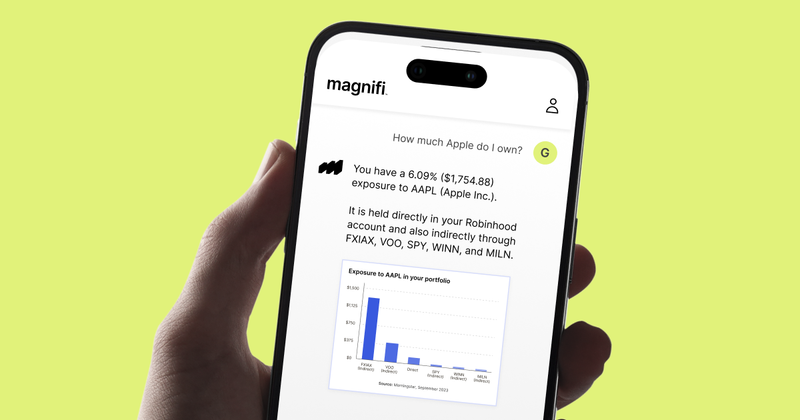
Using AI portfolio analysis provided by Magnifi, investors can now get a valuable look into the risks their portfolios are subject to and can easily make the necessary adjustments.
Risk is an unavoidable part of investing, a part of investing that also keeps many people out of the market and missing out on opportunities to grow their wealth over the long term. Learn how to better manage your risk with the help of your new AI investing app.
Give It A Try Today
Ready to start investing? Click here to meet Magnifi today.
Disclosures:
The information and data are as of September 21, 2023, unless otherwise noted and subject to change. This blog is sponsored by Magnifi.
This material is provided for informational purposes only and should not be construed as individualized investment advice or an offer or solicitation to buy or sell securities tailored to your needs. This information covers investment and market activity, industry, or sector trends, or other broad-based economic or market conditions and should not be construed as investment research or advice. Investors are urged to consult with their financial advisors before buying or selling any securities. Although certain information has been obtained from sources believed to be reliable, we do not guarantee its accuracy, completeness, or fairness. Past performance is no guarantee of future results. This content may not be reproduced or distributed to any person in whole or in part without the prior written consent of Magnifi. As a technology company, Magnifi provides access to tools and will be compensated for providing such access. Magnifi does not provide broker-dealer or custodial services.