7 Portfolio Management Steps for Stock Market Investing

7 Portfolio Management Steps for Stock Market Investing
What is Portfolio Management?
Portfolio management is a crucial aspect of successful investing in the stock market. It involves the strategic selection and ongoing administration of assets within a portfolio, in this case a stock portfolio, with the ultimate aspiration of achieving an individual's investment goals and objectives.
Effective portfolio management ensures that investments are well-balanced and diversified, to better manage one's risk, all in an attempt to try and maximize potential returns.
The key piece of effective portfolio management is that you try and limit your losses as much as possible because even holding your portfolio value steady is better than the value declining over time. So, there are methods and practices investors can implement in order to maximize the potential profits of the good times and minimize the sting of the downtrends.
To try and better adhere to the above investing mandate, investors use several types of portfolio management, each catering to their own risk profiles, financial objectives, and long-term investing goals.
Passive portfolio management is a low-cost approach that involves tracking and mimicking the performance of a specific market index, such as the S&P 500. This type of portfolio management can be achieved through index funds or Exchange Traded Funds (ETFs), which offer broad market exposure without requiring extensive research or frequent adjustments.

Active portfolio management, on the other hand, entails a more hands-on approach where an investor or fund manager actively seeks out opportunities for higher-than-average returns by selecting individual stocks or sectors based on in-depth analysis. This method typically incurs higher expenses due to increased trading activity and research costs but can potentially result in greater rewards if successful.
Another type of portfolio management is discretionary or advisory services, where professional advisors recommend investment decisions based on an individual's unique financial circumstances and goals. Investors can choose to follow these recommendations entirely or partially, ultimately retaining control over their portfolios.
We'll consider 7 steps in the portfolio management process which should provide investors a comprehensive framework when investing in the stock market:
- Define Investment Objectives: Set clear financial goals, time horizon, and risk tolerance levels.
- Develop An Asset Allocation Strategy: Determine the ideal mix of assets (stocks, bonds, cash) based on risk tolerance and desired returns.
- Conduct Portfolio Analysis: Research individual stocks to identify attractive investment opportunities that align with your strategy.
- Construct Your Portfolio: Carefully select securities that meet your criteria and complement each other to form a well-diversified mix.
- Monitor Performance: Regularly review your holdings' performance against benchmarks to gauge progress toward your objectives.
- Rebalance: Periodically adjust your portfolio to maintain the desired asset allocation and respond to changes in individual investments’ performance.
- Review and Revise: Reevaluate your investment strategy, goals, and risk tolerance periodically to ensure they remain aligned with your changing circumstances.
Portfolio management examples can be found in the many investment vehicles available for investors. By knowing how much exposure they have to one stock, ETF, or sector in their portfolio, an investor can actively manage risk and optimize returns through rebalancing and diversification.
For instance, if an investor notices that a recent surge in technology stocks has caused them to become overweight within their portfolio compared to their initial asset allocation plan, they may choose to sell some of these shares and reinvest the proceeds into underrepresented sectors or asset classes. This not only realigns their portfolio with their original strategy but also reduces potential risks associated with overexposure to a single industry.
If you’re trying to learn more about portfolio management in finance and investing, the best way to describe it is a strategic approach based on sound investment principles such as diversification, periodic rebalancing, performance monitoring, and alignment that keep investors on track for their investment goals.
By implementing various types of portfolio management techniques that best suit individual needs and circumstances, investors can significantly enhance their chances of achieving long-term financial success in the stock market.
Developing a Structured Portfolio Management Strategy
Structured portfolio management is a comprehensive approach to managing the assets within an investment portfolio in a way that balances risk and return. This method of portfolio management incorporates various strategies to ensure that investors can achieve positive appreciation of assets while managing the downside as best they can.
One such strategy involves the use of diversification, which can be achieved by investing in different types of securities across various industries and sectors.
The importance of diversification in structured portfolio management cannot be overstated, as it helps investors better manage their overall risk exposure. Think of it as not putting all your eggs in one basket.
For example, consider an investor who has all their wealth tied up in a single stock. If that company were to suffer significant losses or go bankrupt, the investor's entire portfolio would be severely impacted, resulting in disastrous consequences for their financial well-being.
To avoid such scenarios, investors should aim to spread their investments across multiple stocks, sectors, and asset classes within their portfolios. This can involve investing in equities (stocks), fixed income securities (bonds), real estate, and alternative investments like commodities or private equity funds.
By doing so, they increase the likelihood that even if one investment performs poorly, others may perform well enough to offset those losses.
A well-diversified stock portfolio should include companies from different sectors such as technology, healthcare, consumer goods, and finance. This ensures that if market conditions negatively impact one sector – say technology due to new regulations – other sectors may continue performing well or even experience gains due to unrelated factors.
You could rummage through investment analysis and portfolio management questions and answers PDF documents on the internet and you will find the same emphasis on the need for thorough research before making any investment decisions that you'll find here.
But until investors put what they learn in all these investing resources, that knowledge cannot help them with their investing. Investors must understand each security's fundamentals and how it fits within their overall risk tolerance before including it in their portfolios.
There are many resources available for educating oneself on structured portfolio management principles, although it does take considerable time and dedication to learn how to apply these principles effectively.
Investors must remember to research their investments thoroughly before adding them to their portfolios. This due diligence will inform any decision you make such as adding or subtracting from any of your investment positions. However, without knowing your portfolio inside and out, managing it all can become a bit cumbersome for the average investor.
Ultimately, the key takeaway for investors is that structured portfolio management, featuring well-researched diversification efforts, can help manage the inherent risks associated with investing in the stock market. By adopting these principles, investors can build resilient portfolios capable of weathering various economic conditions while still achieving their long-term financial goals.
Implementing Your Portfolio Management Scheme
Portfolio management is a critical aspect of investing that enables investors to better manage risk and optimize returns. A portfolio management scheme, or strategy, is a personal approach designed to help you make informed decisions based on sound principles and best practices in risk and portfolio management. The development of such a plan can be invaluable for your long-term investing success, as it allows for proper diversification, asset allocation, and ongoing monitoring.
The importance of portfolio management lies in its ability to manage risks while attempting to maximize potential returns. By carefully selecting investments that are well-diversified across different asset classes, industries, and geographic regions, investors can reduce their exposure to market volatility.
Additionally, a well-crafted portfolio management scheme will consider the individual investor's risk tolerance and investment objectives, ensuring that the chosen investments align with their specific needs and goals.
One way to assess risks in a portfolio is through "portfolio analysis," which includes examining various factors such as the relationship between the individual assets within the portfolio (correlations), past performance trends (historical data), and external economic factors. Portfolio analysis can also involve assessing each investment's contribution to overall risk by calculating its standard deviation or beta coefficient relative to the broader market.
For example, suppose an investor holds stocks from different sectors such as technology, healthcare, financial services, etc. In this case, they may use correlation analysis tools like pair-wise correlations or heat maps to understand how these stocks relate to one another.
If there is a high positive correlation between some of their holdings – meaning they tend to move in tandem – they may face increased concentration risk; in this instance engaging in proper diversification might entail adding investments from unrelated sectors into their holdings.
The analysis of individual assets within a portfolio reveals important insights into the stock market's interplay and helps investors manage their risks effectively. By examining factors such as beta coefficients and standard deviations from the mean return rate over time, investors gain valuable information about potential risks during significant market shifts. In the realm of the stock market and portfolio management in finance, this understanding becomes a critical tool for success as a portfolio manager.
Understanding these risks can also help investors select investments with the appropriate level of risk for their specific objectives and risk tolerance. For example, an aggressive investor may seek out stocks with high betas, which tend to be more volatile than the overall market. In contrast, a conservative investor may focus on lower-beta stocks or bonds that are less likely to experience significant price swings.
Developing a well-thought-out strategy will help investors not only manage risk but also increase the likelihood of achieving their financial goals. By employing tools like diversification, asset allocation, and portfolio analysis, investors can create a robust and resilient investment plan capable of weathering market fluctuations and delivering consistent returns over time.
Utilizing Innovation: Using Investment Portfolio Management Software
Thanks to some of the latest advancements in technology, investors no longer have to manage their portfolios on their own or through the use of a financial advisor. Today, there is a bevy of options investors have when coming up with application of portfolio management.
Investment portfolio management software platforms are revolutionizing the way investors analyze and manage their assets. By leveraging advanced technology and user-friendly interfaces, these cutting-edge tools are transforming the investment landscape.
One such example of new, innovative technologies for portfolio management is Magnifi, an investment platform harnessing the power of artificial intelligence (AI) to deliver unparalleled insights about your investment portfolio in real time.
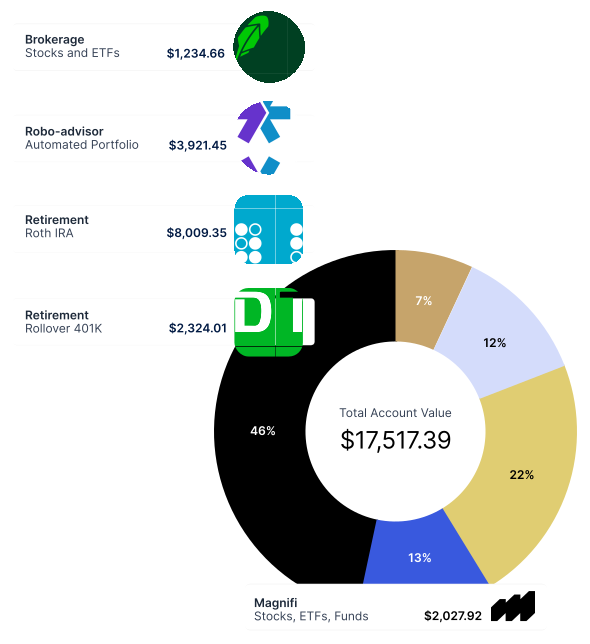
Artificial intelligence (AI) can play a pivotal role in improving investors' understanding of market risk by assisting with portfolio analysis and management. This sophisticated technology sifts through vast amounts of data to uncover patterns, trends, and correlations that might not be visible to the average investor. As a result, AI-driven application portfolio management systems can identify potential areas of overexposure or untapped opportunities within an investor's holdings.
By utilizing machine learning algorithms, Magnifi goes beyond merely identifying risks; it also offers investing guidance to help a user optimize their personalized investment strategy. For instance, the platform can instantly detect when an investor's portfolio is heavily concentrated in a specific stock or market sector. Armed with this information, individuals can make informed decisions about diversifying their holdings or rebalancing their asset allocation.
Furthermore, AI-powered investment portfolio management software can continuously track changes in market conditions and automatically adjust portfolios based on pre-set parameters. This dynamic approach ensures that users remain ahead of the curve even during periods of high volatility or rapid shifts in market trends.
In addition to Magnifi, there are other notable examples of investment portfolio management software that cater to both individual investors and professional money managers alike.
The integration of artificial intelligence into modern investment portfolio management software has profoundly impacted how investors navigate today's complex markets.
Investment apps like Magnifi empower users with actionable insights and real-time recommendations that take the guesswork out of understanding their exposure levels and making intelligent investment decisions. As innovations in AI-driven application portfolio management continue to evolve, the possibilities for investors to enhance their wealth management strategies are seemingly limitless.
How Magnifi Can Help You with Portfolio Management?
Through use of Magnifi, investors now have their own personal AI investing assistant. Instead of combing through your various investment accounts trying to see what your exposure to a stock like Apple (AAPL) or Tesla (TSLA), you can link all your outside investment accounts to Magnifi and have your investing assistant do the heavy lifting for you.
From there, investors can determine whether or not it's time to shift which stocks or sectors you’re allocating your money to, a key part to any portfolio management scheme. There may even be hidden risks you have not yet taken into account, find out what valuable insights AI can help you uncover in your own stock portfolio today.
Give It A Try Today
Ready to start investing? Click here to meet Magnifi today.
Disclosures:
The information and data are as of October 18, 2023, unless otherwise noted and subject to change. This blog is sponsored by Magnifi.
This material is provided for informational purposes only and should not be construed as individualized investment advice or an offer or solicitation to buy or sell securities tailored to your needs. This information covers investment and market activity, industry, or sector trends, or other broad-based economic or market conditions and should not be construed as investment research or advice. Investors are urged to consult with their financial advisors before buying or selling any securities. Although certain information has been obtained from sources believed to be reliable, we do not guarantee its accuracy, completeness, or fairness. Past performance is no guarantee of future results. This content may not be reproduced or distributed to any person in whole or in part without the prior written consent of Magnifi. As a technology company, Magnifi provides access to tools and will be compensated for providing such access. Magnifi does not provide broker-dealer or custodial services.
Diversification does not guarantee a profit or protect against a loss in a declining market. It is a method used to help manage investment risk.
Rebalancing/Reallocating can entail transaction costs and tax consequences that should be considered when determining a rebalancing/reallocation strategy.
Mutual Funds and Exchange Traded Funds (ETF’s) are sold by prospectus. Please consider the investment objectives, risks, charges, and expenses carefully before investing. The prospectus, which contains this and other information about the investment company, can be obtained from the Fund Company or your financial professional. Be sure to read the prospectus carefully before deciding whether to invest.