Should You Buy Stocks or an ETF?
Should You Buy Stocks or an ETF?
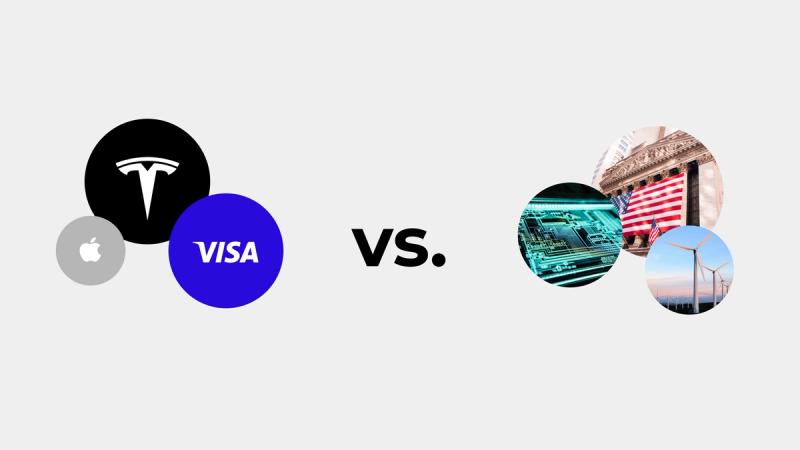
Should you build your portfolio with stocks or ETFs?
More ways to invest means more ways to build wealth. In general, that’s a good thing, but that doesn’t mean every method of investing is right for you. So when it comes to building your portfolio - is it better to buy shares or ETFs, and how do you decide where to start?
Both approaches can help you to add diversification to your portfolio, but it's mostly a matter of how much time and effort you want to spend researching your investments. Let’s parse through the nitty-gritty, so you can decide whether stocks (including buying fractional shares), ETFs, or a combination of both is the right path for you.
Shares and fractional shares explained
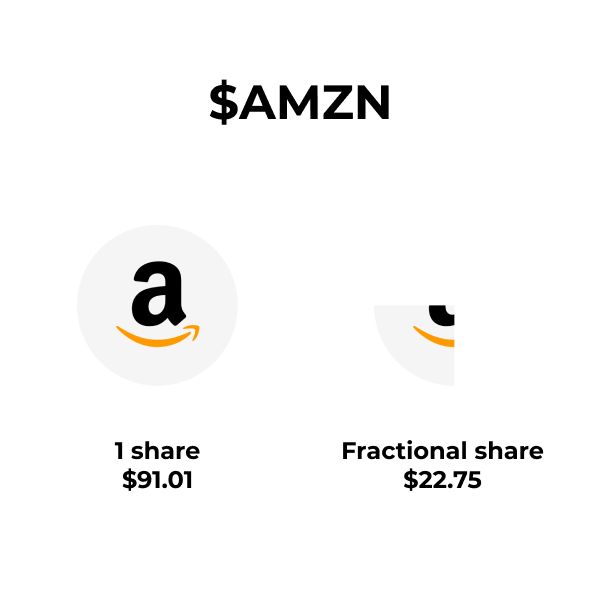
What is a fractional share? A fractional share is a portion of a single stock of a company. They’ve been popular since about 2017, when a robo-advisor popularized the practice of offering fractional shares outright, rather than simply as a result of stock splits or dividends payouts.
If you liken a single stock to a slice of company ownership, investing in a fractional share is like taking that slice and cutting it up into even smaller pieces.
There are three main ways to get fractional shares:
- Buy fractional shares outright from a brokerage that offers them.
- Automatically reinvest dividends into an existing investment.
- Hold onto a company’s stock while it undergoes a stock split, and you may get fractional shares (depending on the split ratio). Note: A stock split doesn’t change your investment value—just the number of shares you hold.
Pros and Cons of Fractional Shares:
Pros:
- Fractional shares allow you to access high-priced stocks you may not otherwise be able to afford.
- This method may help “democratize” the stock market for retail investors, aka making it more accessible for everyday folks looking to build wealth.
- Investing in fractional shares makes dollar-cost averaging more affordable (this refers to the practice of adding to a position regularly, whatever the cost).
Cons:
- Fractional shares often require you to invest in individual stocks. This can make diversification tedious when you choose the wrong brokerage (with Magnifi, you can buy fractional shares of most ETFs, in addition to individual stocks!).
- Investing with little money to start may cause some investors to jump into a purchase without thinking it through.
- Purchasing an extra-small fractional share may reduce the impact of any returns and dividends due to transaction and broker fees.
Exchange-traded funds (ETFs), explained
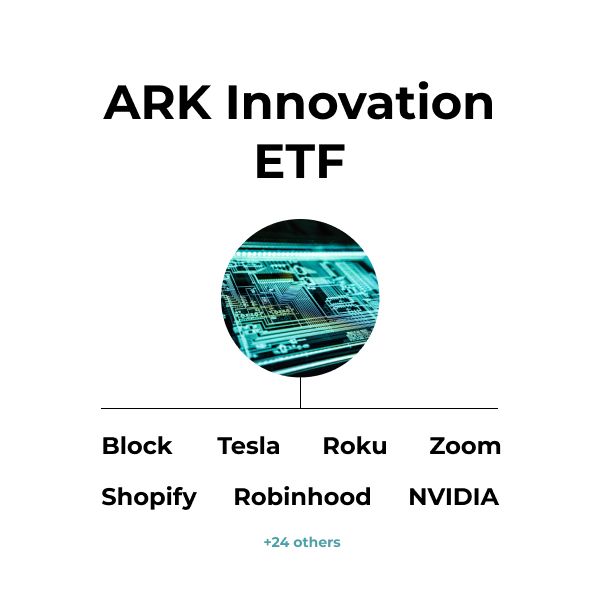
What is an ETF? An ETF is a basket of stocks and other securities that trades on an exchange, just like an individual stock. ETFs are bought and sold throughout the day (unlike mutual funds, which only trade once per trading day). Exchange-traded funds (ETFs) first came on the scene in the 1990s and have gone through many evolutions since.
ETFs can be passively or actively managed. Passive ETFs aim to track an index, while active ETFs have portfolio managers in the background making investing decisions.
Pros and Cons of ETFs:
Pros:
- Because ETFs are made up of a group of stocks and securities that change over time, they have built-in diversification and rebalancing.
- Many ETFs track particular themes, like women-led companies, renewable energy, dividends, or commodities. This helps you customize your investing strategy without going all-in on any one stock.
- Investors tend to spend less on brokerage commissions when trading ETFs compared to if they bought those same stocks piece by piece. (Note: This is only worth considering if you use a brokerage with commission-based trading. Magnifi doesn’t have commissions on trades.)
Cons:
- Some actively managed ETFs have high expense ratios (aka the fund’s administrative and operating fees). Many times, the fund's performance outweighs the expense ratio, but that’s not always the case.
- You cannot control what investments go in an ETF.
- ETFs that hold illiquid securities (like gold, for example) do not boast the same level of liquidity as stocks.
ETFs vs. stocks and fractional shares: How to assess your investment goals and choose the right path
Neither ETFs nor fractional shares are inherently better than the other. However, we can help you determine your investing goals and find a solution that helps you achieve them.
Questions you can ask yourself to find your investing "why:"
- What are your life goals for the long-term (retirement), mid-term (middle age), and short-term (in the next 5–10 years)?
- Pro tip: Consider separating your investments by these three categories. You can do this by opening different accounts or reserving portions of an account for each goal. This will help you visualize your progress and give you the chance to test out fractional shares, ETFs, and other investment vehicles.
- Would you rather spend a lot of time building wealth or have your investments work for you?
- Hint: An active investing strategy, like options trading or short selling, works for some. However, if you want your investments to work for you, experts agree it helps to diversify and stick to your strategy for the long haul. Whether you choose fractional shares, ETFs, or another method depends on how much time you’re willing to put in and what tools you have at your disposal.
- What are your investing fears, and how can you overcome them?
- Insight: According to a recent study by Magnifi, 38% of people who don’t invest avoid it out of fear of losing money. Another 27% just don’t know where to start. In both cases, educating yourself on the risk levels of different investments and being open to learning as you go can help you break through that barrier.
Finding ETFs, fractional shares, and other investments that help you reach your ground zero
Whatever you decide, there are ways to find investments that work for you. Here are a few methods:
- Familiarize yourself with the facts. Avoid leaning on overly biased news sources and investing trends. Instead, educate yourself on performance indicators, factual corporate news, and basic investing terminology that will allow you to assess an investment’s viability yourself.
- Use AI assistance. You don’t have to lean on a robo-advisor to glean the benefits of investing tech. AI assistance can help you identify potential investments that help you reach your goals, from geographic diversification to blue-chip stocks and beyond. This can save you time and help you access honed investing guidance. For example, Magnifi Personal serves as an AI assistant that gives you actionable insights and keeps you updated on the market.
- Consider consulting a professional. If you decide to partner with a financial advisor, make sure you look for a fiduciary, meaning they’re legally required to act in your best interest rather than seek commission.
The consensus: Define your ‘why’ and pursue your ‘how’ through the investments that work for you.
Most people invest to build a life and legacy. What that looks like is different for everyone. Identifying your goals, pursuing education, and leaning on tools that help you fill the gaps can get you there. Ultimately, whether it’s ETFs, fractional shares, or another avenue depends on you.
References:
- Mutual Funds and Exchange Traded Funds (ETF’s) are sold by prospectus. Please consider the investment objectives, risks, charges, and expenses carefully before investing. The prospectus, which contains this and other information about the investment company, can be obtained from the Fund Company or your financial professional. Be sure to read the prospectus carefully before deciding whether to invest.
- Dollar cost averaging may help reduce per share cost through continuous investment in securities regardless of fluctuating prices and does not guarantee profitability nor can it protect from loss in a declining market. The investor should consider his/her ability to continue investing through periods of low price levels.
- Active portfolio management, including market timing, can subject longer term investors to potentially higher fees and can have a negative effect on the long-term performance due to the transaction costs of the short-term trading. In addition, there may be potential tax consequences from these strategies. Active portfolio management and market timing may be unsuitable for some investors depending on their specific investment objectives and financial position. Active portfolio management does not guarantee a profit or protect against a loss in a declining market.
- Rebalancing/Reallocating can entail transaction costs and tax consequences that should be considered when determining a rebalancing/reallocation strategy.
- Investments in commodities may have greater volatility than investments in traditional securities, particularly if the instruments involve leverage. The value of commodity-linked derivative instruments may be affected by changes in overall market movements, commodity index volatility, changes in interest rates or factors affecting a particular industry or commodity, such as drought, floods, weather, livestock disease, embargoes, tariffs and international economic, political and regulatory developments. Use of leveraged commodity-linked derivatives creates an opportunity for increased return but, at the same time, creates the possibility for greater loss.