How to Invest in Electric Vehicles
How to Invest in Electric Vehicles
Investing in Electric Vehicles
The road to the mass adoption of electric vehicles (EVs) may still have a few speed bumps, but the future of transportation looks electric. Accelerating climate change is pressing policymakers to curb harmful emissions at all scales, and electric vehicles are leading the way from public transportation to commercial fleets to cars on the road.
With new battery technology in the works, the prices of electric vehicle stocks are jumping, with even more revolutionary innovations on the horizon.
What Are Electric Vehicles?
Electric vehicles (EVs) are no longer a niche industry. Commuters drive Ford (F), as well as Tesla (TSLA) EVs, which both continue to dominate the EV market and top the electric vehicle stocks list as some of the best EV stocks to buy. While TSLA and F might be the some of the most dominant players in the EV market, the technology itself is not just limited to changing the way these automakers do business.
Companies like Walmart (WMT) and Amazon (AMZN) are ordering commercial fleets of electric multi-purpose delivery vehicles (MPDVs). The technology itself is causing a revolution on the road in which cars are driven by electricity, rather than fossil fuels.
Even cities are electrifying their bus fleets to meet their climate change goals. Battery-powered vehicles haven’t yet outsold vehicles that utilize conventional combustion engines, but the writing is on the wall: electric transportation is the future. Battery-operated cars are anticipated to dominate car sales by 2040.
The past five years have seen a six-fold surge in annual sales of EVs, a trajectory that promises to continue through the next decades. Globally, EV sales were anticipated to reach 10.6 million in 2022, a two-thirds increase from 2021. Tesla continues to pull ahead of the race, having sold 2.9 million vehicles around the world, and holding strong in the US for 50 percent of the market.
Automaker giants like Ford and General Motors are also pressing the accelerator on EVs: Ford aims to spend $50 billion by 2026 and GM to spend $35 billion by 2025 on their respective plans. China alone has 6 million EV sales predicted for 2022, with vehicles like the Wuling Hongguang Mini EV, a micro-car whose $5,000 price tag has made it a best seller. The Chinese electric vehicle maker NIO and the Chinese electric scooter maker Niu have also been fueled by enthusiasm for the EV market.
EVs have the potential to help slash carbon emissions and lower costs for drivers, which is why public utilities such as Xcel Energy (XEL) are pushing to get 1.5 million electric cars on the road by 2030. Because EVs are powered by electricity, they don’t have a tailpipe that emits exhaust like internal combustion engines. EVs also do not require liquid fuel components, including a fuel pump, fuel line, or fuel tank. Hybrid vehicles, however, still have these components, as they typically switch over to an internal combustion engine when the electric battery becomes depleted.
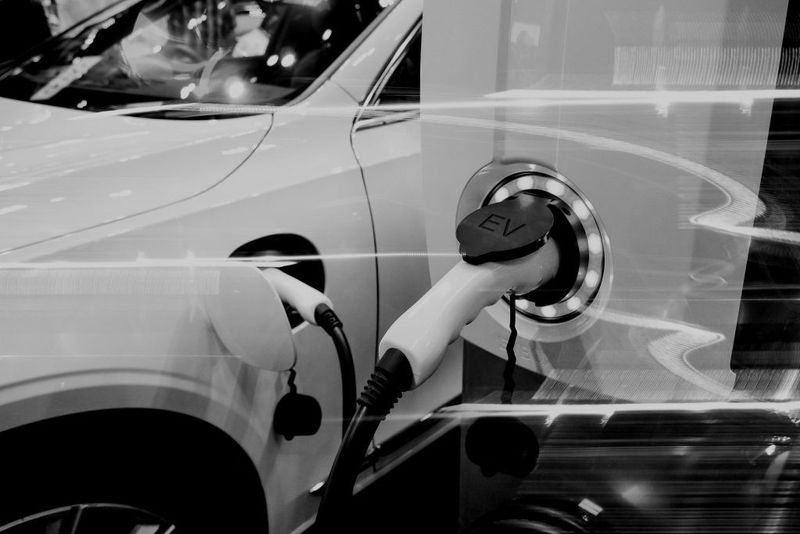
Investing in EVs is more than purchasing Tesla stock. The electric vehicle industry includes the cars and trucks equipped with an electric motor rather than a traditional internal combustion engine—as well as the technologies that allow these vehicles to hit the road. The electric motor is powered by a large traction battery pack which requires a charging station or wall outlet to charge.
Again, the industry and investing don't just stop with the cars. In order to store enough power for there to be a practical application of this technology, you need the batteries in order to make it all possible. That's where lithium battery stocks come into play.
Electric vehicle battery stocks are also a key piece to this puzzle, without them the EV companies that make up your favorite electric vehicle ETF would not be performing all that well. Even TSLA needed to answer this crucial question before making their Model Y and S available for purchase. EVs and EV battery stocks go hand in hand for this theme of investing.

Why Invest in the Electric Vehicle Industry?
Investors looking at the electric vehicle industry should keep an eye on major players like TSLA, as well as automotive companies like F and Porsche, who have jumped into the EV market. Sales promise to soar, thanks to government actions like California’s ban on the new sales of gas-powered cars by 2035, as well as other major sustainable policies to mitigate the effects of global warming.
A recent Climate Action Tracker report sets a high bar to reduce harmful emissions and limit global warming: fully 75 percent to 95 percent of auto sales need to be EVs by 2030, a huge jump from just 5 percent in 2022. This ambitious, crucial goal has reset policy down the line—and added more opportunities for investors who seek to make a difference with their EV investing.
For example, California’s zero-emission subsidy program has jumpstarted companies’ prospects, such as Workhorse, a maker of electric vans, when it cleared a hurdle to participate in the program. Delivery vehicles are driving off the assembly lines in more numbers than ever before, such as General Motors’ EV600, which is joining the fleets of FedEx and Walmart, with production expected to ramp up in 2023.
Also poised for growth (and ripe for investment) are the makers of parts for suppliers such as charging ports, DC/DC converters, thermal systems, and safety systems—an essential component, considering the high voltage that powers electric vehicles. Powertrain, electrical and battery management solutions for components have become essential for automakers who are shifting to all-electric cars.
For example, Magna offers complete vehicle manufacturing, producing vehicles for BMW, Daimler, Jaguar Land Rover and Toyota, as well as Beijing Automotive Group Co.
There are stumbling blocks for electric vehicles. One is the production of batteries that hold a greater charging capacity for a longer period. However, recent efforts to accelerate next-gen battery prototypes are now allowing carmakers to road test the technologies at high speed. Solid-state batteries are generating major excitement for electric vehicle makers. The solid version of the battery can hold three times more electric energy than its traditionally liquid counterpart, hold that energy more efficiently, and ultimately last longer. Battery prices are expected to fall as their energy density improves, making electric vehicles increasingly more affordable.
For example, a new type of battery—solid-state electrolyte—is scheduled to enter the commercial market in 2023. Even with tech stocks slumping, companies like QuantumScape and SES AI are charging ahead with their plans. Support for research and production can include giants like General Motors (GM), Hyundai, Honda, and even Chinese stocks like these automotive companies from China like Geely and SAIC.
Batteries for electric vehicles have become more powerful, safer, and cheaper. Now companies are racing to ensure that these batteries can be manufactured fast enough to keep up with demand.
Another challenge is the accessibility of charging opportunities. For anyone who drives an EV, the length of time it takes to charge the battery, as well as find a charging station is frustrating—even with 9.1 million EV charging connectors available in 2021. With current anticipated demand, by 2050, the number of connectors is predicted to be 469 million—and an additional $1 trillion in investment that should help support increased demand for EVs and make them mainstream.
There are certainly risks: battery manufacturers and EV manufacturers have to be able to scale up production to bring down costs. Raw materials for the batteries and the cars’ components are dependent on global supply chains. And building out the charging infrastructure is still ramping up.
However, with global warming, the priorities of consumers and governments are changing, and more than ever before, EVs are becoming the choice that not only makes sense for individual drivers and businesses, but for the planet too.
How to Invest in Electric Vehicles
Investors interested in the electric vehicle industry look for a good time to get ahead of the curve—before affordable, little-known stocks rise to the heights of Tesla.
Investors can focus on individual companies that are part of the EV industry, or a search on Magnifi shows a number of other ways for investors to access this fast-growing segment via ETFs and mutual funds:
Try Magnifi Today
Ready to start investing? Click here to meet Magnifi today.
References
- McKerracher, Colin, and Aleksandra O’Donovan, Dr. Nikolas Soulopoulos, and Andrew Grant, et al, Electric Vehicle Outlook 2022, BloombergNEF, https://about.bnef.com/electric-vehicle-outlook/
- “The Road to Electric Car Supremacy in 5 Charts,” August 30, 2022, BloombergNEF, https://about.bnef.com/blog/the-road-to-electric-car-supremacy-in-five-charts/
- “Clean Energy & EVs,” accessed November 29, 2022, Xcelenergy.com, https://my.xcelenergy.com/s/
- https://www.forbes.com/advisor/investing/best-ev-stocks/
- Mitchell, Cory, “10 Best EV Stocks of 2022,” Forbes Advisor, https://fortune.com/2020/07/13/tesla-workhorse-electric-vehicles-ev-stocks/
- Kurowicki, Jacob, “Future EVs That Deliver: Electric Delivery Trucks and Workhorses,” January 23, 2022, Car and Driver, https://www.caranddriver.com/features/g38842224/future-evs-that-deliver-electric-delivery-trucks-and-workhorses/
- McKerracher, Colin, et al, Electric Vehicle Outlook 2022
- Tomlinson, Chris, “Tomlinson: New battery tech will pull electric vehicles even with petrol-fueled cars,” August 17, 2020, https://www.houstonchronicle.com/business/columnists/tomlinson/article/New-battery-tech-will-pull-electric-vehicles-even-15473080.php
- Ewing, Jack, “Advanced E.V. Batteries Move From Labs to Mass Production,” July 12, 2022, https://www.nytimes.com/2022/07/12/business/electric-vehicle-batteries.html
- “The Road to Electric Car Supremacy in 5 Charts.”