Investing in Drones
Investing in Drones
What is Drone Technology?
For investors with an eye to the future, drones represent a multi-billion-dollar industry that is already changing the way businesses and governments operate, but what is drone technology and how do they work? Both questions we will answer here.
When one refers to drone technology, they are usually referring to unmanned vehicles that can carry out tasks that normally would require a human operating said vehicles. These unmanned air and land craft can transport payloads or deliver all your latest order from an online retailer, such as Amazon (AMZN).
Drones are having a widespread impact on a large number of industries, promising to increase efficiency and productivity, improve accuracy, and decrease production costs—and the industry is just starting to take off.
What is a Drone?
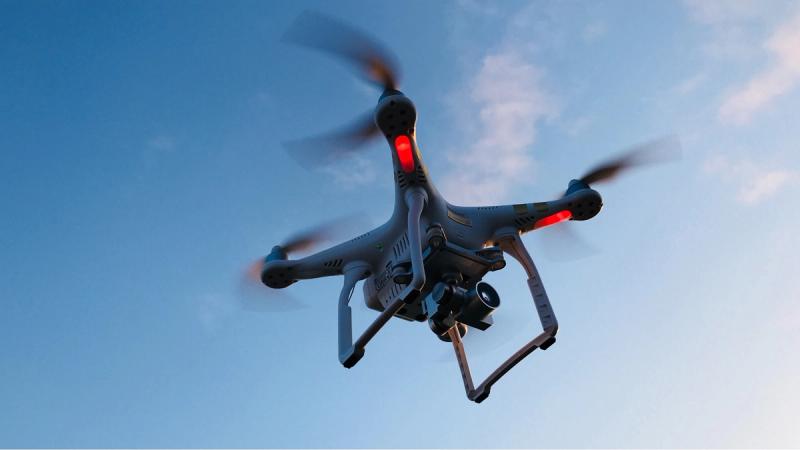
Drones can sometimes be referred to as Unmanned Aerial Vehicles (UAVs); essentially, it is just an un-piloted air, land, or spacecraft. The buzzing hobby-drones that people see at the park are just the tip of the iceberg of a booming industry.
There have even been entirely new industries created in the wake of the latest in drone technology. Photographers and videographers use them to get a whole new perspective on whatever it is they're trying to capture.
Drone racing is another industry that has gained a lot of traction in just the past few years alone. Two competitors control a drone and race through obstacle courses in hopes to win cash prizes that are now offered at many of the major tournaments, like for the Drone Racing League.
How Do Drones Work?
Controlled remotely or with a smartphone app or flown by a human operator, drones can be small enough to fit in your hand or as large as traditional aircraft. They help search and recovery efforts during disasters and provide geographic mapping information to scientists studying remote areas.
Drones are used in filmmaking, both for filming aerial scenes and for scouting potential filming locations. They assist law enforcement in surveillance and gather information and extend technical operations for the military. For businesses, governments, and the military, the use of drones fulfills precision tasks with relatively little effort, time, and energy.
Drones come in a wide variety and there are many different types of drones, but they usually have one thing in common: their mini drone camera. Single Rotor Helicopters look like small helicopters, and they are often used to transport heavy objects, survey land, and gather data.
Multi-Rotor Drones are small and often used for photography or hobby-flying. Fixed-wing drones look like normal airplanes and run on fuel rather than electricity, allowing them to run for much longer.
The past few years have seen the use of these UAV drones expand across many different industries, pushing the boundary of what drones are used for. However, if we look back on the history of drones, we find that drone technology has been in service since World War I as military drones.
Then Orville Wright and the founder of Delco, Charles F. Ketttering, supervised a secret project that developed the “Kettering Bug,” the world’s first “self-flying aerial torpedo,” which was essentially a wooden biplane that could carry a 180-pound bomb.
Now militaries around the world utilize drones for reconnaissance and offensive strikes in hard-to-reach areas, avoiding putting a pilot’s life at risk. Drones also don’t require rest like their human counterparts, just enough fuel or battery power to fulfill their mission.
Drones are playing an important role in advancing our knowledge of space, with profound implications for the future of aeronautics. NASA uses drones to assist in space travel and exploration, such as the Mars rover mission in 2020, which included a helicopter scout.
Beginning in 2026, a space drone will begin to investigate Saturn’s icy moon, while currently many unmanned reusable spacecraft clock several months in low orbit to gather valuable data.

In 2006, the U.S. Federal Aviation Administration (FAA) approved non-military, commercial applications of drones. Then, suddenly, their uses expanded to functions from pipeline inspections to crop evaluation to security and beyond.
From agriculture and environmental monitoring to services for law enforcement and delivery, drones are improving and expanding the efficiency and accuracy of research, civic, military, and commercial projects around the world.
Today, the global drone market is flying high with market size going from $26.3 billion in 2021 to an estimated $41.3 billion by 2026. The FAA expects the recreational drone market to soften to between 1.81 and 1.84 units sold and registered by 2023, depending on advancements in technologies like batteries, for example; the likelihood of prices falling; and easing regulations.
However, the commercial drone market was already booming in 2020 at $6 billion dollars. Fueled by drone services and data collecting, by 2028, it is predicted to climb to $54.2 billion. Investors are taking note of the drone industry’s potentially stratospheric rise in the markets.
Why Invest in Drones?
Investors interested in the innovation that is drone technology should find comfort in the fact that mass military, commercial, and personal applications are quickly becoming a thing.
Militaries around the world are investing in new drone platforms with implications for advancements in hardware, software, services, and logistic support.
Companies like BAE Systems, Northrop Grumman (NOC), Lockheed Martin (LMT), Boeing (BA), and Honeywell (HON) have not only figured out how to make a drone, but they've begun to perfect them. These have broad and diverse operations from aeronautics and mission systems to cybersecurity and satellite communications.
Commercial deliveries are another huge part of the drone industry. In September 2020, AMZN received approval from the Federal Aviation Administration to “establish a fleet of drones” and begin testing drone deliveries. This follows companies including Uber Technologies Inc. (UBER), Wing - owned by Alphabet (GOOGL), and UPS (UPS). This is a long-awaited step forward after AMZN's first announcement that it would pursue drones for delivery in 2013.
Investors are also tracking companies that are pioneering future technologies. They are taking drones to new heights, such as autonomous passenger drones and electric vertical takeoff and landing (VOTL) aircraft, which will someday lift passengers above city gridlock.
Image metrics and analytics software to support micro-drones and “drone-in-a-box” solutions promise to bring the potential of drone technology within reach of businesses who need far-ranging mapping and imaging tasks, such as those in the agricultural sector requiring monitoring thousands of acres or administering aerosol vaccines.
Behind all these advances (and many more) there are numerous companies developing, manufacturing, and selling this in-demand technology. VOTL aircraft and other autonomous vehicles are helping to send the industry into higher growth and even more opportunities for investors.
How to Invest in Drones
Drones are playing a pivotal role in the innovation of a large number of sectors across the market, from military and defense applications to surveying and data collection for agriculture.
Thanks to Magnifi, your new investment co-pilot, investors can now research individual drone companies and all the different drone stocks. Stocks that either make the software or hardware for this industry, even the commercial businesses like AMZN, which are investing in drone technology to innovate the way they handle logistics.
A search on Magnifi provides a number of drone mutual funds and drone ETFs that give investors access to this growing industry. When you find relevant stocks or funds you are interested in, you can quickly buy them and add them to your Magnifi portfolio.
If you're looking for some inspiration, check out some of the common searches those who are also looking to invest in drone technology have conducted to find the right stocks for them:
References:
- "Drone Technology: What Is a Drone?," March 23, 2023, builtin.com, https://builtin.com/drones
- "What Is Drone Racing?," thedroneracingleague.com, https://thedroneracingleague.com/about-drl/#:~:text=DRONE%20RACING%20LEAGUE%20(DRL),across%20virtual%20and%20physical%20competitions.
- "NASA's Dragonfly Will Fly Around Titan Looking for Origins, Signs of Life," June 27, 2019, nasa.gov, https://www.nasa.gov/press-release/nasas-dragonfly-will-fly-around-titan-looking-for-origins-signs-of-life
- “Investing In Drone Technology: UAV ETF,” September 2, 2022, Ameritrade, https://tdameritradenetwork.com/video/investing-in-drone-technology-uav-etf.
- FAA Aerospace Forecast Fiscal Years 2022–2042, accessed November 22, 2022, Federal Aviation Administration, https://www.faa.gov/sites/faa.gov/files/2022-06/Unmanned_Aircraft_Systems.pdf
- “Global Commercial Drone Market Size to Boom 5x to Touch USD 54.2 Billion by 2028,” October 11, 2022, Globe NewsWire, https://www.globenewswire.com/en/news-release/2022/10/11/2532136/0/en/Global-Commercial-Drone-Market-Size-to-Boom-5x-to-Touch-USD-54-2-Billion-by-2028-BlueWeave-Consulting.html#:~:text=During%20the%20forecast%20period%20between,USD%2054.17%20billion%20by%202028.
- Herrara, Sebastian, and Andy Pasztor, “Amazon Gets U.S. Approval for Drone Fleet, a Package-Delivery Milestone,” September 2, 2020, AviationPros.com, https://www.aviationpros.com/aircraft/unmanned/news/21152784/amazon-gets-us-approval-for-drone-fleet-a-packagedelivery-milestone.
Disclosures:
Magnifi is changing the way we shop for investments, with the world’s first semantic search engine for finance that helps users discover, compare and buy investment products such as ETFs, mutual funds, and stocks. Open a Magnifi investment account today.
The information and data are as of November 26, 2022 unless otherwise noted and subject to change. This blog is sponsored by Magnifi.
This material is provided for informational purposes only and should not be construed as individualized investment advice or an offer or solicitation to buy or sell securities tailored to your needs. This information covers investment and market activity, industry, or sector trends, or other broad-based economic or market conditions and should not be construed as investment research or advice. Investors are urged to consult with their financial advisors before buying or selling any securities. Although certain information has been obtained from sources believed to be reliable, we do not guarantee its accuracy, completeness, or fairness. Past performance is no guarantee of future results. This content may not be reproduced or distributed to any person in whole or in part without the prior written consent of Magnifi. As a technology company, Magnifi provides access to tools and will be compensated for providing such access. Magnifi does not provide broker-dealer or custodial services.
Investments in commodities may have greater volatility than investments in traditional securities, particularly if the instruments involve leverage. The value of commodity-linked derivative instruments may be affected by changes in overall market movements, commodity index volatility, changes in interest rates or factors affecting a particular industry or commodity, such as drought, floods, weather, livestock disease, embargoes, tariffs, and international economic, political, and regulatory developments. Use of leveraged commodity-linked derivatives creates an opportunity for increased return but, at the same time, creates the possibility for greater loss.
Neither Asset Allocation nor Diversification guarantee a profit or protect against a loss in a declining market. They are methods used to help manage investment risk.
Mutual Funds and Exchange Traded Funds (ETF’s) are sold by prospectus. Please consider the investment objectives, risks, charges, and expenses carefully before investing. The prospectus, which contains this and other information about the investment company, can be obtained from the Fund Company or your financial professional. Be sure to read the prospectus carefully before deciding whether to invest.