Normal Person Explains the Stock Market

Normal Person Explains the Stock Market
Financial markets can seem intimidating at first glance. Between the jargon and the potential to lose some of your hard earned money, it’s easy to get overwhelmed. With a little knowledge you can gain the confidence to get started investing.

So-called “normal” people (aka most of us) can understand the stock market. All it takes is a straightforward explanation from a trusted source telling you how to get started in the stock market.
The gist: Below is a sample conversation between a stock market newbie and a helpful friend. Let this Q+A guide you, and don’t be afraid to ask for more help when you’re done.
Q: What is a stock, and how does the stock market work?
A: A stock represents partial ownership of a company. When a company becomes publicly traded, they offer a set number of stocks (also called shares) at a specified price, which anyone in the public can buy.
The stock market is a financial marketplace where people buy and sell stocks. Like any marketplace, supply and demand play a crucial role in determining the price of the asset over time.
There are different stock markets around the world. In the U.S., the New York Stock Exchange (NYSE) and Nasdaq Exchange are open from 9:30 a.m. to 4:00 p.m. Eastern, Monday through Friday, excluding market holidays (1).
There are many ways to invest in stocks, which you’ll learn about as you become a practiced investor.

Q: What is the best way to get started in the stock market for a normal person?
A: In a recent Magnifi survey, 27% of people said they wouldn’t independently invest because they don’t know where to start. Another 41% said they lack the confidence to invest on their own. These reservations make sense - it can be scary to jump into the market if you aren’t 100% sure that you understand it. But, by taking it slow and looking at the big picture, you can get past those fears.
The best way for normal people to get started with investing is by choosing a brokerage account that gives you as much control or guidance as you want.
On one end of the brokerage spectrum are robo-advisors (where you deposit money and the account makes investing decisions for you).
The other end consists of totally hands-off accounts (where you deposit money and make all investing decisions based on your own knowledge).
Somewhere in the middle are accounts that guide you (such as Magnifi, an AI assistant that shares investing options based on the user’s unique investing inquiries and goals).
Q: Why should I invest in the stock market?
A: Investing in the stock market is one of the most profitable ways to build wealth. While earning money from work, living below your means, and saving up can help you achieve financial stability, investing takes it further.
A well-managed and diversified portfolio puts your money to work for you, helping to preserve your assets and helping them grow during your lifetime, rather than decreasing in value (inflation!). That way, you can do the things you’ve always wanted to do.
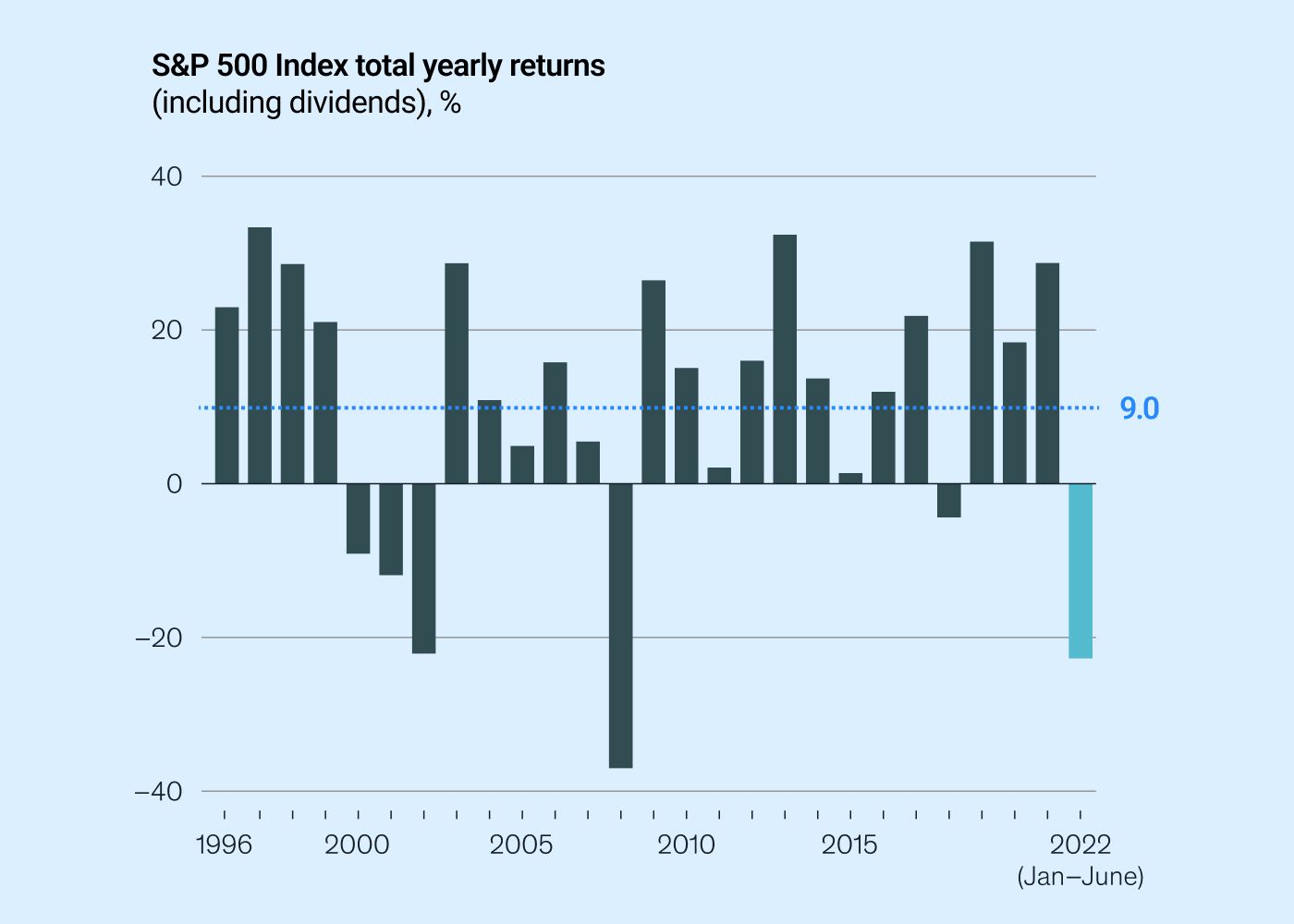
Source (2): McKinsey & Company
Q: What are the risks involved in investing, and what happens if the stock market crashes?
A: Any investment in the stock market involves risk. Often, you’ll hear phrases like: “Don’t invest what you can’t lose.” However, historical data shows that your money will grow over time with a diversified portfolio that you adjust over time to reflect your financial goals.
While the stock market has crashed a handful of times since The Great Depression, it has always bounced back. A bear market, or a decline of 20% or more from the market’s highest to lowest point, occurs about every six years on average (3).
If you’re invested for the long haul, you have plenty of time for your investments to recover. As you get closer to retirement or another financial goal, you can gradually adjust your portfolio to be more conservative (aka less risky) so it won’t get hit so hard by any market downturn that may come.
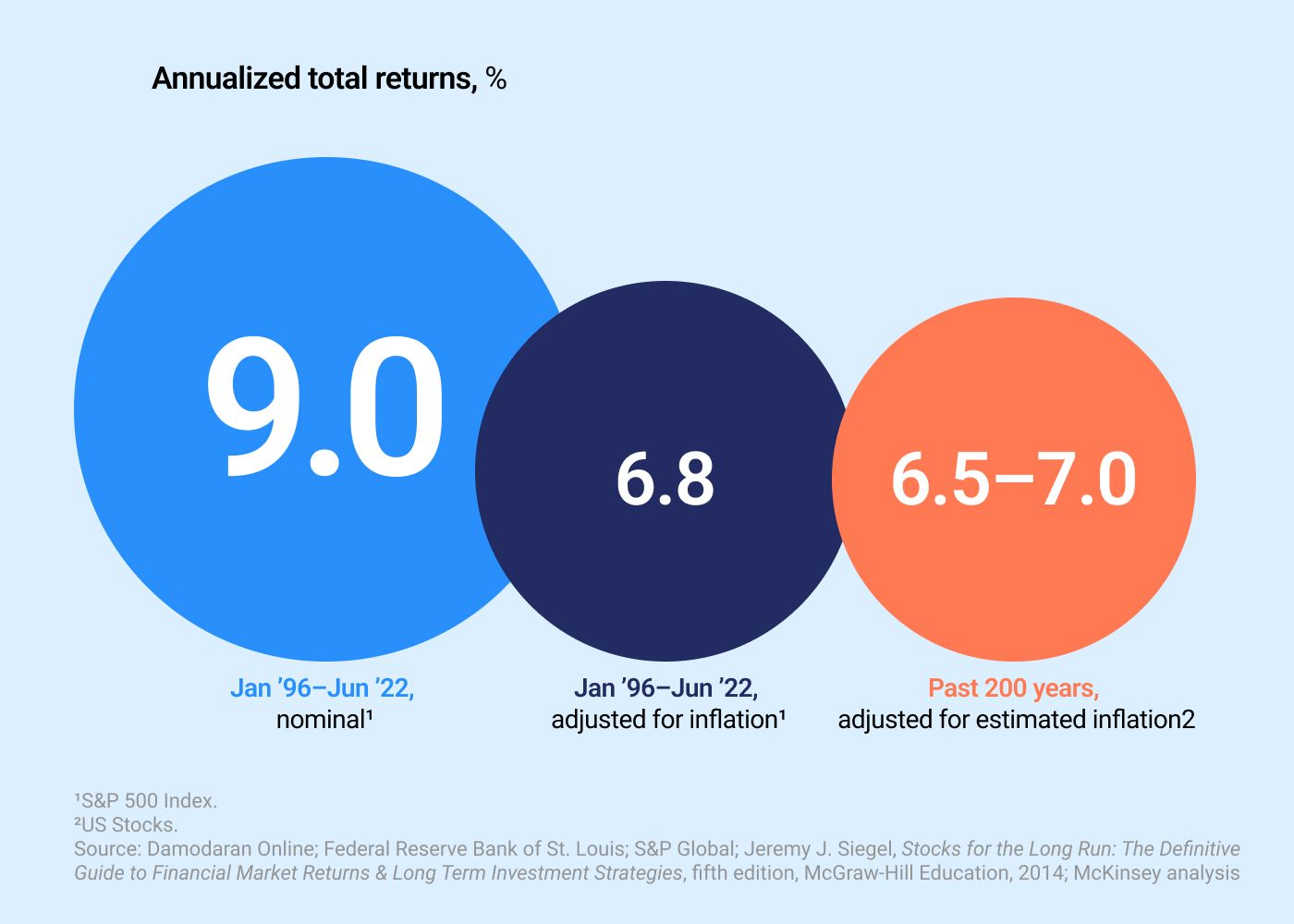
Source: McKinsey & Company
Q: What is the difference between a short-term and long-term investment?
A: The best way to answer this question is by looking to the Internal Revenue Service (IRS) for guidance.
According to the IRS, a short-term investment is any asset you sell within one year or less of purchasing, while a long-term investment is any asset you sell within more than one year of purchasing. Your capital gains taxes will reflect this difference (pro tip: long-term capital gains taxes are lower than short-term capital gains taxes!).
When it comes to setting personal financial goals, you may delineate between short-term and long-term investing goals a little bit differently. For example, you may consider any goal you want to achieve within five years a short-term goal, while anything longer is a long-term goal.
Q: How do I decide what to invest in?
A: Choosing your investments requires an understanding of your:
- Investing goals: What you’re investing for (58% of Americans are either not on track or don't know if they are on track to achieve their financial goals, according to a Magnifi survey—but you can be in the minority!)
- Risk tolerance: How much volatility you are willing to accept
- Time horizon: How long until you want to access the money
- Interests and values: For example, do you have an interest in AI technology, or want to invest in oil?
- Preferred level of control: Do you want a hands-off or DIY strategy, or somewhere in between?
- Preferred way to invest: Individual stocks, exchange-traded funds (ETFs), mutual funds, etc.

Q: Where can I get help with stock market investing?
A: A recent Magnifi study tells us that 30% of people get financial advice from family or friends. There’s something to be said for learning about the market from “normal” people who don’t have a vested interest in your financial decisions, but it’s always best to find a source that has all the right information.
For example, AI-powered investing guidance lets you make your own decisions while showing you all the options at your fingertips. This balance of control and assistance is valuable for the everyday investor who wants to feel in charge of their fate without spending all day researching the market. One option in this category, Magnifi, is an AI investing assistant that lets you ask questions, then gives you real answers about the stock market—including the best ways to invest for your personal objectives.
However you choose to invest, make sure you can trust the person or technology that’s helping you. After all, your investments can impact your life for the better.
Try Magnifi Today
Ready to start investing? Click here to meet Magnifi today.
References:
- "Trading Hours for the Nasdaq Stock Markets," Nasdaq, https://www.nasdaq.com/stock-market-trading-hours-for-nasdaq.
- Indices are unmanaged and investors cannot invest directly in an index. Unless otherwise noted, performance of indices does not account for any fees, commissions or other expenses that would be incurred. Returns do not include reinvested dividends. The Standard & Poor's 500 (S&P 500) Index is a free-float weighted index that tracks the 500 most widely held stocks on the NYSE or NASDAQ and is representative of the stock market in general. It is a market value weighted index with each stock's weight in the index proportionate to its market.
- "Bear market basics," Fidelity, 03 November 2022, https://www.fidelity.com/viewpoints/market-and-economic-insights/bear-markets-the-business-cycle-explained.
- "Topic No. 409 Capital Gains and Losses," Internal Revenue Service, https://www.irs.gov/taxtopics/tc409.
Disclosures:
Indices are unmanaged and investors cannot invest directly in an index. Unless otherwise noted, performance of indices does not account for any fees, commissions or other expenses that would be incurred. Returns do not include reinvested dividends. The Standard & Poor's 500 (S&P 500) Index is a free-float weighted index that tracks the 500 most widely held stocks on the NYSE or NASDAQ and is representative of the stock market in general. It is a market value weighted index with each stock's weight in the index proportionate to its market value.