Investing in Sensors
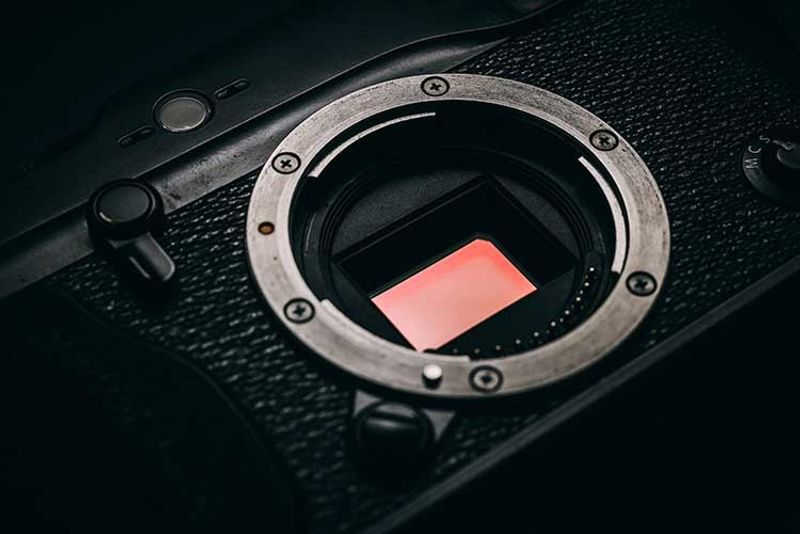
Investing in Sensors
From smart appliances to medical imaging equipment to industry-scale innovations… sensors are playing a big role in advancing technology and connecting more and more information to the Internet of Things.
Sensors are even being used in medicine for wound care by monitoring your body’s temperature, glucose levels, blood pressure, and more (1).
The market for sensors has enormous potential. In 2017, the global sensor market was valued at $139 billion, according to a report by Allied Market Research (2). By 2025, it is projected to reach $287 billion. And the global market for smart appliances alone is projected to reach $65.3 billion by 2027 (3). That’s up from about $25.9 billion in 2020.
What are sensors?
Sensors are devices that “detect events or changes in the environment and then provide the corresponding output. They sense physical input such as light, heat, motion, moisture, pressure, or any other entity, and respond by producing an output on a display or transmit the information in electronic form for further processing” (4).
Types of sensors include but are not limited to motion sensors, light sensors, thermal sensors, wind sensors, and smoke sensors (5).
Sensors are used in a variety of environments and applications, including flood and water level monitoring systems, environmental monitoring, traffic monitoring and controlling, energy saving in artificial lighting, remote system monitoring, equipment fault diagnostics, and precision agriculture and animal tracking (6).

Why invest in sensors?
Sensors are an industry of themselves and have applications across industries. They play a critical role in the advancement of the Internet of Things and industrial production. Sensors also make our cars and our phones smarter, monitor environmental changes, advance robotics, and more. With all those applications, where do you get started finding investments in sensors?
One starting point is with supervisory control and data acquisition (SCADA) systems. There are approximately three million SCADA systems across the globe. These industrial control systems offer real-time business IT in industries including water and wastewater, oil and gas, power/electric utilities, transit systems, telecom, and aquaculture (7). SCADA systems are considered the “brains of the plant,” but they wouldn’t be possible without sensors (8). Sensors give these systems vital information, functioning as their eyes and ears. As their sensors become “smarter,” they are improving operations and results at three million plants.
The applications for sensors go far beyond industrial efficiency.
The overall gas sensors market reached $1.1 billion in 2021, and is expected to grow to $1.5 billion by 2026, according to a market research report published by MarketsandMarkets (9). Gas sensors are in high demand globally in critical industries—for cloud computing, IOT deployment, and consumer electronics. They are also crucial for air quality monitoring for smart cities. According to one report, spending on smart city technology is expected to reach $327 billion by 2025.
The global military sensors market size was $25.94 billion in 2019 and is projected to reach $34.58 billion by 2027, according to a new report by Fortune Business Insights (10). This is in part driven by the growth of Wireless Sensor Network (WSN) technology.
The wireless sensors network market was valued at $46.76 billion in 2020 and is expected to reach $123.93 billion by 2026, according to a Market Insights report (11). Wireless sensors are making it possible to remotely monitor patients with wearable biosensors, among many other things. In healthcare, they are also enabling smart thermometers, connected inhalers, and automated insulin delivery (AID) systems (12).
Smartphones are so smart in part because of their sensors. This everyday device includes proximity sensors, accelerometer/motion sensors, moisture sensors, gyroscopes, touch ID and face ID. One group of researchers are even working on a smartphone biosensor that detects COVID-19 (13).
Sensors have huge applications within the future of the automotive industry. Several automakers and start-ups, including Tesla (TSLA) and Waymo, owned by Google's parent company Alphabet (GOOGL), are leading the way in self-driving cars and trucks. Autonomous vehicles will require huge numbers of sensors and have also incorporated a new technology called “sensor fusion” which helps “process information from multiple data sensors simultaneously in real-time” and contribute to vehicle safety (14).
Sensors make our world as it exists today possible. They provide solutions for everything from advanced robotics and automation to healthcare IOT to smart cities. In the post-pandemic word, data driven solutions are expected to be increasingly in-demand. This means that sensors will be the eyes of many, many technologies to come. Find investments in sensors with these searches:
References:
- Brown, Matthew S., Ashley, Brandon, and Koh, Ahyeon, “Wearable Technology for Chronic Wound Monitoring: Current Dressings, Advancements, and Future Prospects,” National Library of Medicine, 26 April 2018, https://www.ncbi.nlm.nih.gov/pmc/articles/PMC5932176/.
- “Sensor Market by Type, Technology, and End User: Global Opportunity Analysis and Industry Forecast, 2021 – 2028,” Allied Market Research, April 2021,” https://www.alliedmarketresearch.com/sensor-market.
- “$25.9 Billion Worldwide Smart Appliances Industry to 2027 - Impact of COVID-19 on the Market,” PR Newswire, 03 February 2021, https://www.prnewswire.com/news-releases/25-9-billion-worldwide-smart-appliances-industry-to-2027---impact-of-covid-19-on-the-market-301221232.html
- “Sensor Market by Type, Technology, and End User: Global Opportunity Analysis and Industry Forecast, 2021 – 2028,” Allied Market Research.
- “Smart Sensors: Applications, Benefits, and Working,” Wisilica, 3 December 2019. https://wisilica.com/company/smart-sensors-its-applications-benefits-and-working/
- “Sensor Market by Type, Technology, and End User: Global Opportunity Analysis and Industry Forecast, 2021 – 2028,” Allied Market Research
- “What is SCADA and the Importance of SCADA system,” TechChuck, 8 December 2015, https://techchuck.com/2015/12/08/what-is-scada-and-the-importance-of-scada-system/
- Miller, David, “Sensor Fusion: The Swiss Army Knife of Digitalization,” AutomationWorld, https://www.automationworld.com/process/sensors/article/21232617/sensor-fusion-the-swiss-army-knife-of-digitalization
- “Gas Sensors Market worth $1.5 billion by 2026—Exclusive Report by MarketsandMarkets,” PR Newswire, 11 February 2021, https://www.prnewswire.com/news-releases/gas-sensors-market-worth-1-5-billion-by-2026--exclusive-report-by-marketsandmarkets-301226751.html.
- “Military Sensors Market to Reach USD 34.58 Billion by 2027; Introduction to Wireless Sensor Network Technology to Aid Growth, says Fortune Business Insights,” GlobeNewswire, 21 January 2021, https://www.globenewswire.com/news-release/2021/01/21/2162306/0/en/Military-Sensors-Market-to-Reach-USD-34-58-Billion-by-2027-Introduction-to-Wireless-Sensor-Network-Technology-to-Aid-Growth-says-Fortune-Business-Insights.html.
- “Wireless Sensors Network Market Evolving Technology, Growth and Industry Outlook 2021 to 2026,” openPR, 11 February 2021, https://www.openpr.com/news/2240620/wireless-sensors-network-market-evolving-technology-growth.
- Sentance, Rebecca,” 7 examples of how the internet of things is facilitating healthcare,” 19 January 2021, https://econsultancy.com/internet-of-things-healthcare/.
- “LSU researchers create smartphone sensor to detect COVID-19,” 22 January 2021, https://www.businessreport.com/newsletters/lsu-researchers-create-smartphone-sensor-to-detect-covid-19
- “How Self-driving Cars Work: Sensor Systems,” 3 March 2021, https://www.udacity.com/blog/2021/03/how-self-driving-cars-work-sensor-systems.html