The Basics of High Yield Investing: 5 Ways to Start

The Basics of High Yield Investing: 5 Ways to Start
How AI can help you invest
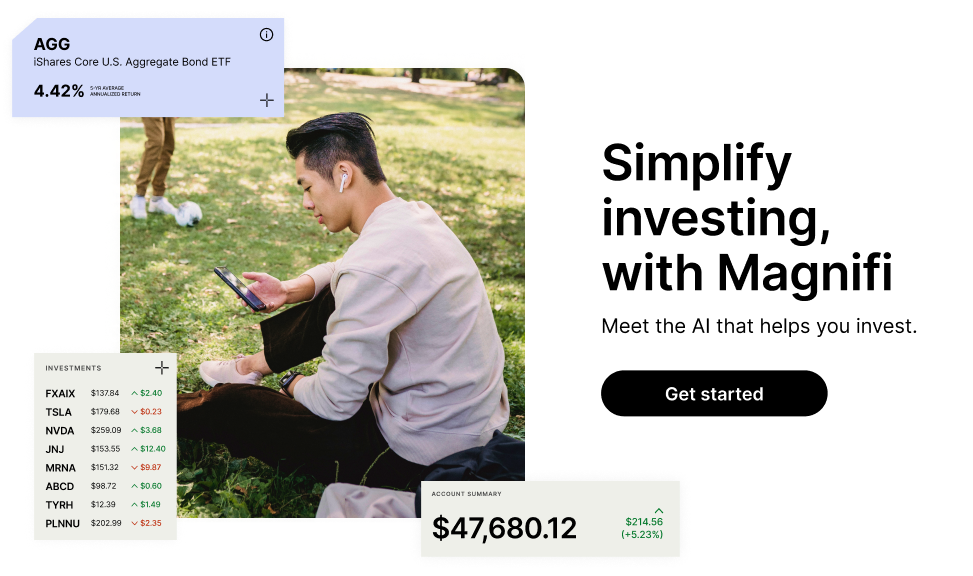
Meet Magnifi, the world’s first AI designed to help you invest. With the power of conversational AI, Magnifi is like your virtual financial advisor. Think of it like Siri or Alexa went to investing school.
Magnifi can help you quickly find, buy, and manage investments, all personalized to your unique financial goals. And if you’re just getting started, Magnifi will guide you to build a plan, understand your potential for success, and start investing in just minutes.
The Basics of High Yield Investing: 5 Ways to Start
High-yield investing is an investing strategy that focuses on assets that offer above average yields. It’s a strategy that’s typically employed by investors seeking to generate substantial returns on their investments. High-yield investments, also known as income-producing investments, typically involve securities that pay regular dividends, interest payments, or rental income. If you've ever wondered how to invest and make money daily, high-yield investments is the closest you're going to get to it.
Since you are generating income on your investments in addition to their appreciation (or lack thereof) it's like you're being paid to hold the investment.

It’s generally best practice when investing money for beginners to note that high-yield investments may not be suitable for everyone. As with any investment strategy, high-yield investing comes with some inherent risks that should be carefully considered. Investors should assess their risk tolerance, investment goals, and time horizon before allocating a significant portion of their portfolio to high-yield investments.
Building a portfolio around high-yield investments involves diversifying across different asset classes to manage risk and potentially increase returns. Here are five good investments for beginners to consider when aiming for high-yield opportunities:
1. Dividend-Paying Stocks
These are shares of companies that distribute a portion of their profits to shareholders in the form of dividends. Dividend stocks can provide regular income and the potential for capital appreciation.
2. Bonds
Corporate bonds, municipal bonds, or government bonds can offer fixed income payments over a specified period. Higher-yield bonds, often referred to as junk bonds, offer higher interest rates but also carry higher default risk (source).
3. Real Estate Investment Trusts (REITs)
REITs are companies that own and manage income-generating real estate properties. Investing in REITs allows individuals to access real estate assets without the need for direct ownership, providing potential income through rental payments and property appreciation.
4. Peer-to-Peer Lending
Peer to peer lending involves lending money to individuals or businesses through online platforms that connect borrowers with investors. P2P lending platforms can offer higher interest rates compared to traditional savings accounts, but it's important to carefully evaluate borrowers' creditworthiness.
5. High-Yield Savings Accounts
While not traditionally considered investments, high-yield savings accounts can provide a relatively low-risk option for beginners. High-yield savings accounts offer higher interest rates than regular savings accounts, allowing individuals to earn passive income on their cash holdings.

It is crucial to maintain a balanced approach when constructing a portfolio focused on high-yield investments. Diversification across various asset classes and investment types can help mitigate risk and increase the potential for consistent returns. It's also essential to conduct thorough research to fully understand the fundamentals of each investment, as well as to consider seeking advice from financial professionals when necessary.
How To Invest Money for the Highest Yield Possible
Investing money can be an effective way to grow wealth and achieve financial goals. It's important for beginners who are looking to start investing to understand the basics and develop a strategy that aligns with their objectives. Here are a few tips on investing in stocks for beginners, which can lead to a higher yield on your money:
1. Educate Yourself
Before investing, take the time to educate yourself about different investment options, strategies, and associated risks. Familiarize yourself with key terms such as dividends and yields and learn all you can about the basics of investing. There are numerous online resources, books, and courses that can help beginners establish a solid foundation of investment knowledge.
2. Set Investment Goals
Define your investment goals, whether it's saving for retirement, a down payment on a house, or funding a child's education. Having clear goals is crucial for shaping your investment strategy and time horizon.
3. Start with a Budget
Establish a budget to determine how much you can comfortably invest. Even small amounts can grow significantly over time through the power of compounding.
4. Choose a Brokerage Account
Select a reputable brokerage firm that suits your needs. Many brokerages have minimum deposit requirements, so consider how much money you have available to start with when choosing a brokerage. Some brokerages offer advising services that can help you identify the best stocks for beginners with little money.
5. Focus on Dividend Stocks
Dividend stocks refer to companies that distribute a portion of their profits to shareholders. These stocks can be attractive to beginners as they provide regular income streams. To find the best dividend stocks to invest in, research and identify successful companies with a solid track record of paying dividends consistently.
6. Consider High-Yield Investment Products
High-yield investment products, such as bond funds or real estate investment trusts (REITs), can provide attractive income opportunities. Bond funds pool investors' money to be invested in a diversified portfolio of bonds, while REITs allow investors to access real estate assets without direct ownership.
7. Diversify Your Portfolio
To reduce risk, you can diversify your investments across different asset classes and industries. This may help to offset losses in one investment with gains in another. Consider allocating a portion of your portfolio to dividend stocks and high-yield investments while also including other investments like index funds or exchange-traded funds (ETFs) for broader market exposure.
8. Monitor and Review
Regularly monitor your investments and review their performances. In particular, keep an eye on company news, dividend payments, and market trends. Make adjustments to your portfolio as necessary to keep your strategy balanced and aligned with your goals.
Remember, investing always carries risks — the best thing you can do to manage your investment risk is remain keenly aware of it. Consider consulting with a financial advisor who can provide personalized guidance based on your specific circumstances and goals. By following these steps and following the guidance of experienced professionals, you can learn how to invest money to make money and achieve tangible progress towards your financial aspirations.
Finding Where To Invest Money To Get Good Returns
To achieve good returns on your investments, it is crucial to carefully consider where to invest your money. While there is no guaranteed formula for success, certain strategies can increase the likelihood of achieving favorable returns over the long term. One such strategy involves exploring high-yield investments.
High-yield investments can provide good returns by offering above-average income or growth potential. While these investments typically involve higher levels of risk, they can also deliver substantial rewards. Investors should take care to balance risk and reward according to their risk tolerance and investment goals.
It can be helpful to utilize tools that leverage artificial intelligence (AI) and advanced algorithms to help you identify where to invest money to get the best returns. These tools can analyze vast amounts of data, market trends, and historical performance to provide valuable insights and guide investment decisions.
What Is a Good Investment Return?
Good returns are subjective and depend on an investor's goals, risk tolerance, and time horizon. For some, good returns might mean consistently outperforming the market, while for others, it might mean achieving steady income streams. Ultimately, good returns meet or exceed an investor's expectations and financial objectives.
How to Use AI to Get Better Investment Returns
AI-powered investment tools can be valuable resources for identifying high-yield opportunities. AI investment tools can assess various investment options, conduct comprehensive risk analyses, and provide real-time recommendations. Investors can use AI to access sophisticated algorithms that continuously learn and adapt to market conditions, potentially improving investment outcomes.
However, you should never rely solely on AI investing tools. Artificial intelligence is only one component of a well-rounded investment strategy, which should also include thorough research, diversification, and ongoing monitoring.
Diversification is key in pursuing good returns while managing risk. Spreading your investments across different asset classes and industries can help mitigate the impact of market volatility on the overall portfolio.
To improve your chances of getting good returns on investments, you should consider high-yield opportunities. AI-powered tools can provide valuable insights and guidance, but these tools should be leveraged in conjunction with comprehensive research and a well-rounded investment strategy. By diversifying your investments and keeping yourself informed, you can increase your potential for achieving desired returns over the long term.
Best Place To Invest Money Right Now
When considering the best place to invest money right now, there are several options available. Investing in stocks is almost always a popular choice. With advancements in technology, investing in stocks online has become increasingly accessible and convenient. Online investing platforms and apps make it easier than ever before for individuals to participate in the stock market.
Investing in stocks online allows investors to directly purchase shares of companies through brokerage accounts. These accounts can be opened with various online brokers, offering a range of features and services. When determining where to invest in stocks, consider factors such as fees, research tools, customer support, and the platform's user-friendliness.
Online Investing Apps to Know
Magnifi is an AI investing app that provides users with access to a wide range of investment tools. It offers a user-friendly interface and powerful search capabilities to help investors find investment opportunities that align with their preferences and goals.
For example, apps like Magnifi can be particularly useful for investors looking to reinvest their dividends. Dividends are periodic payments made by companies to their shareholders as a portion of their profits. Reinvesting dividends allows investors to purchase additional shares of stock automatically, compounding their investment over time.
How to Invest in Stocks Online
To invest in stocks online, simply follow these steps:
- Select an online brokerage platform that suits your needs and has a good reputation.
- Open an account with your chosen brokerage and complete any necessary documentation.
- Fund your account by transferring money from a bank account.
- Research stocks and identify companies that align with your investment strategy.
- Place buy orders for your desired stocks through the online platform by specifying the number of shares and price.
- Monitor your investments regularly and make adjustments as needed.
It's important to note that investing in stocks carries risks, and thorough research and analysis are always essential. You should carefully consider your risk tolerance and investment goals before investing in the stock market.
Try Magnifi Today
Ready to start investing? Click here to meet Magnifi today.
References:
- “High-Yield Bond: Definition, Types, and How to Invest,” Updated August 23, 2022, investopedia.com, www.investopedia.com/terms/h/high_yield_bond
- “Real Estate Investment Trusts (REITs),” investor.gov, www.investor.gov/introduction-investing/investing-basics/investment-products/real-estate-investment-trusts-reits
- “How to Invest for Dividends,” December 9, 2022, mangifi.com, www.magnifi.com/learn/how-to-invest-for-dividends
Disclosures:
Magnifi is changing the way we shop for investments, with the world’s first semantic search engine for finance that helps users discover, compare, and buy investment products such as ETFs, mutual funds, and stocks. Open a Magnifi investment account today.
The information and data are as of July 13, 2023, unless otherwise noted and subject to change. This blog is sponsored by Magnifi.
This material is provided for informational purposes only and should not be construed as individualized investment advice or an offer or solicitation to buy or sell securities tailored to your needs. This information covers investment and market activity, industry, or sector trends, or other broad-based economic or market conditions and should not be construed as investment research or advice. Investors are urged to consult with their financial advisors before buying or selling any securities. Although certain information has been obtained from sources believed to be reliable, we do not guarantee its accuracy, completeness, or fairness. Past performance is no guarantee of future results. This content may not be reproduced or distributed to any person in whole or in part without the prior written consent of Magnifi. As a technology company, Magnifi provides access to tools and will be compensated for providing such access. Magnifi does not provide broker-dealer or custodial services.
Mutual Funds and Exchange Traded Funds (ETF’s) are sold by prospectus. Please consider the investment objectives, risks, charges, and expenses carefully before investing. The prospectus, which contains this and other information about the investment company, can be obtained from the Fund Company or your financial professional. Be sure to read the prospectus carefully before deciding whether to invest.
Dollar cost averaging may help reduce per share cost through continuous investment in securities regardless of fluctuating prices and does not guarantee profitability nor can it protect from loss in a declining market. The investor should consider his/her ability to continue investing through periods of low-price levels.
Neither Asset Allocation nor Diversification guarantee a profit or protect against a loss in a declining market. They are methods used to help manage investment risk.